Prompt Repository
How to replicate this
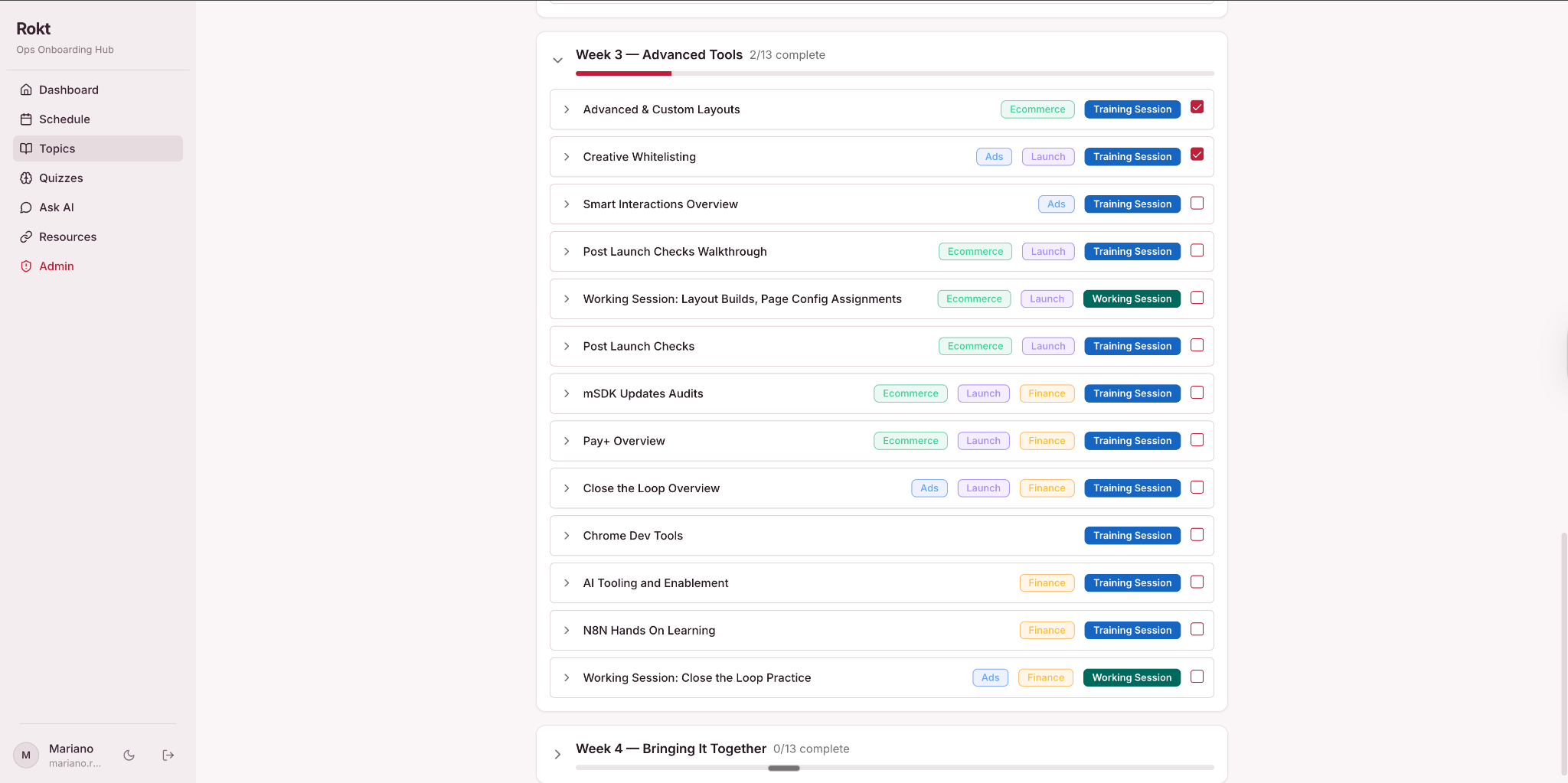
"Build a web-based onboarding hub for our operations team. The program needs multiple learning tracks (e.g. Ecommerce, Ads, Launch, Finance) with sessions tagged by topic so each new hire sees a curriculum customized to their role. Structure it in weekly phases — foundations first, then specialized tools, then advanced workflows, then a capstone week that brings it all together.
Each session should be expandable with a description, linked slide deck, and recording. Include completion checkboxes that persist per user so managers can track progress (e.g. '2/13 complete' per week).
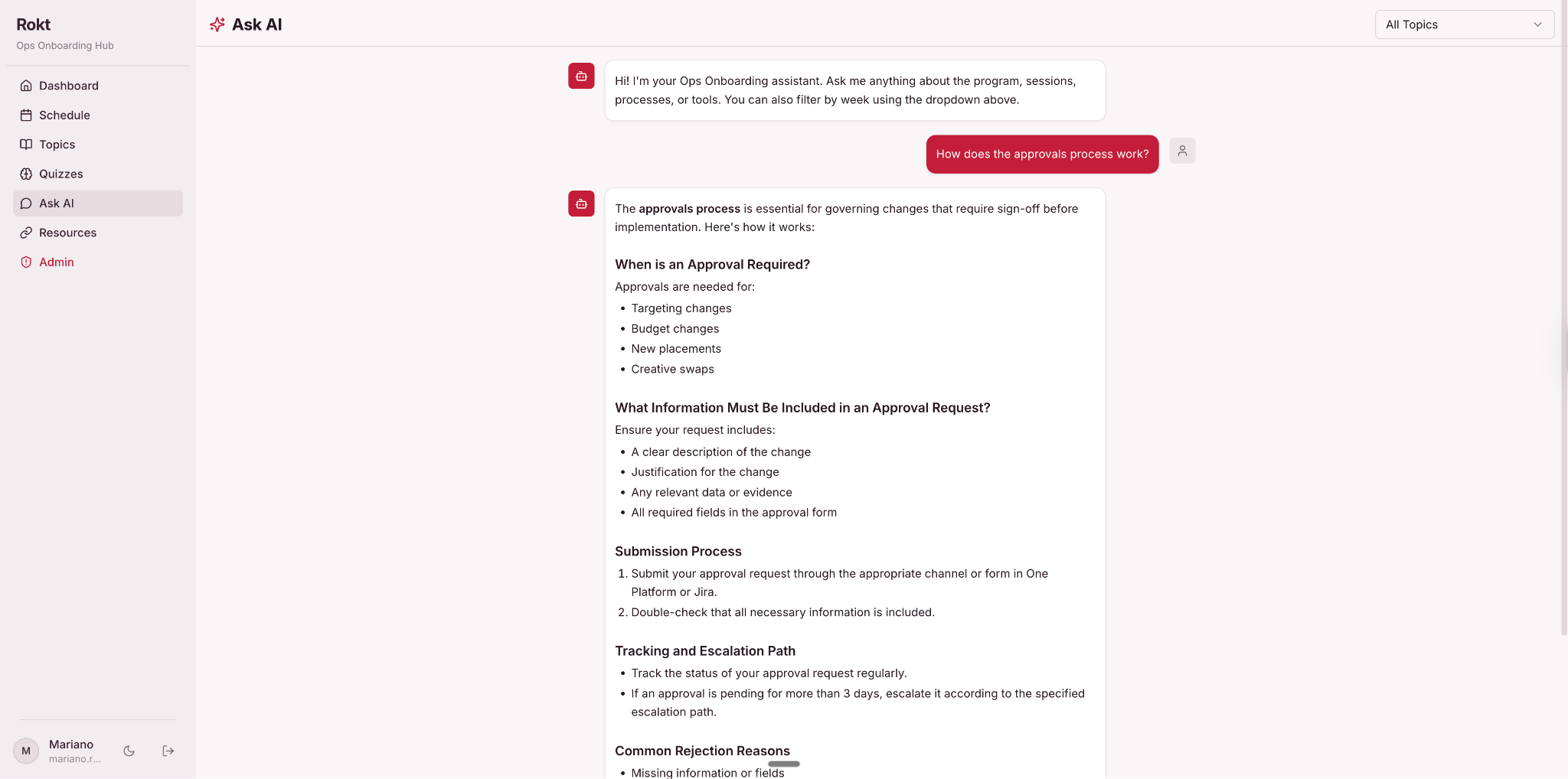
Build an 'Ask AI' feature scoped to the onboarding content library. New hires should be able to ask questions about any process, tool, or policy covered in the program and get answers grounded in our actual documentation — not generic responses. Include a topic filter dropdown so they can narrow context by week or subject area.
Add a quiz system after key modules that tests whether someone actually understands the material. Questions should be generated from the session content and require applied thinking, not just recall.
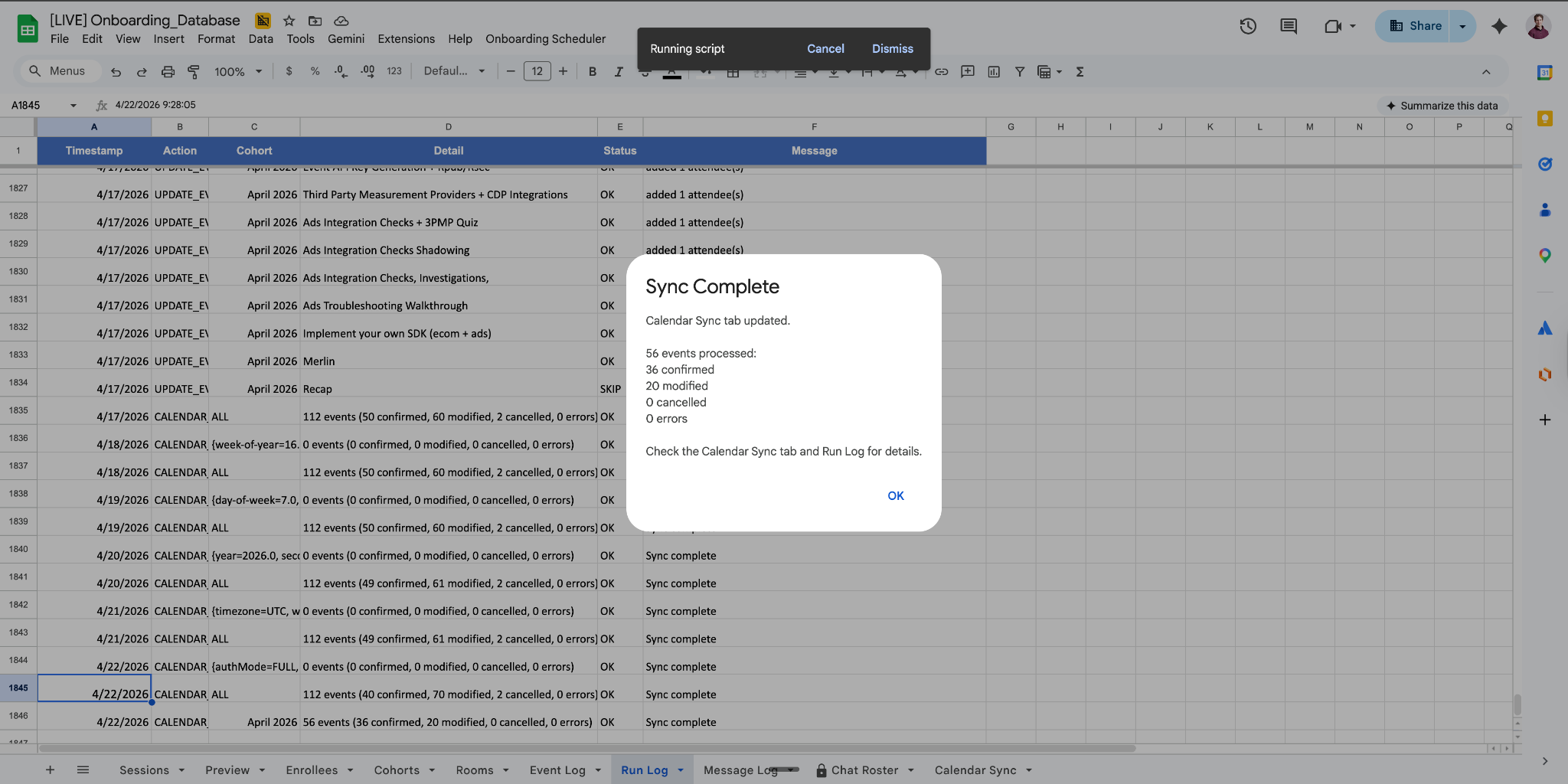
For scheduling: build an automation that syncs all onboarding sessions to Google Calendar in bulk, handles cohort assignments, and logs confirmation/modification/error status per event. The system needs to process 50+ events per cohort with zero manual calendar management.
The hub should have a sidebar with Dashboard, Schedule, Topics, Quizzes, Ask AI, Resources, and Admin views. Admin should be able to manage cohorts, enrollees, and session content without touching code."
The prompt above is a starting point, not a one-shot solution. The actual build required multiple iterations: refining instructions based on output, uploading reference documents for context, mapping the right tooling and integrations, and working through edge cases. Treat this as the brief that kicks off the conversation, not the conversation itself.